The structure changed most
Ancients replace Boss Relics, alternate acts change routing assumptions, and co-op makes the sequel feel less like a straight content expansion.
Compare
This page is for players coming back from the first game who want a clean answer before they dive into new mechanics, card pools, or class guides. The sequel keeps the climb, but it changes enough structure and enough class identity that old instincts need a short reset.
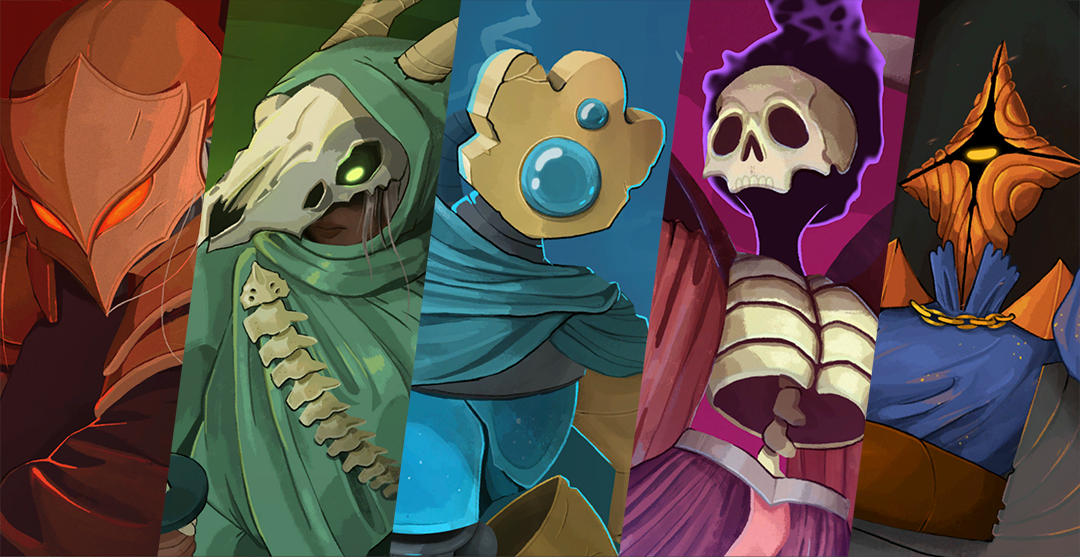
Quick Answer
Ancients replace Boss Relics, alternate acts change routing assumptions, and co-op makes the sequel feel less like a straight content expansion.
Ironclad is the smoothest bridge, but Silent and Defect both require you to relearn public launch-build assumptions before forcing old habits.
If your question is really about card, relic, or potion churn, the compare tools below will get you to the right answer faster than the longform sections.
Compare Tools
Biggest Changes
| Aspect | Slay the Spire | Slay the Spire 2 |
|---|---|---|
| Boss power spikes | Boss Relics (pick 1 of 3) | Ancients grant Blessings at act start |
| Deck penalties | Curses (junk cards in deck) | Afflictions (debuffs on existing cards) |
| Act structure | Fixed acts with known enemies | Alternate Acts (Overgrowth vs Underdocks) |
| Multiplayer | Solo only | Co-op up to 4 players (Steam friends) |
| Roster | 4 classes (Ironclad, Silent, Defect, Watcher) | 5 classes (no Watcher, add Necrobinder + Regent) |
| Card modifiers | None | Enchantments (permanent card mods during a run) |
| Meta-progression | Automatic unlocks | Timeline / Epochs (manual claim required) |
| Engine | LibGDX / Java | Godot (rebuilt from scratch) |
Biggest Changes
Adrenaline
Base text · Upgraded text · Keywords
Alchemize
Subject · Base text · Upgraded text · Keywords
Barrage
Base text · Upgraded text
Barricade
Upgraded text · Keywords
Biased Cognition
Rarity
Akabeko
Rarity · Description · Keywords
Art of War
Rarity
Astrolabe
Rarity · Description · Keywords
Bag of Marbles
Rarity
Black Blood
Subject · Rarity · Description · Keywords
Blessing of the Forge
Rarity
Distilled Chaos
Rarity · Description
Heart of Iron
Subject · Rarity · Description · Keywords
Liquid Memories
Rarity · Description · Keywords
Snecko Oil
Description · Keywords
Boss Relics are gone. Instead, Ancients — NPC characters you meet at the start of each act — offer Blessings that shape your run. The timing and choice structure is completely different from picking one of three relics after a boss fight. Most runs will not see an energy relic at all, which forces entirely different resource planning.
Curses have been replaced by Afflictions: enemy-applied penalties attached directly to your existing cards rather than standalone junk cards added to your deck. This means enemies now attack your deck quality, not just your HP. You cannot simply remove an Affliction at a shop the way you could remove a Curse.
The Spire itself has been rebuilt with Alternate Acts. Each act can appear as one of two biome variants with different enemies, events, and bosses. Act 1 might be Overgrowth or the Underdocks, and the difference is significant enough to change your routing.
Enchantments are permanent card modifiers you can apply during a run. Some are pure upside, others trade power for a cost — the Corrupted enchantment increases a card's damage by 50% but costs 3 HP every time you play it. Matching an enchantment's downside to your deck's strengths is a new skill to learn.
Quest Cards are unplayable cards that sit in your deck until you meet a condition, then transform into powerful rewards. Byrdonis Egg hatches at a campfire into a companion that fights alongside you. They add a risk-reward layer: taking a Quest Card means carrying a dead draw until it completes.
Native co-op for up to four players adds team-specific cards, card passing between players, and a revive mechanic. The game was designed with multiplayer in mind, not bolted on after the fact. Co-op is Steam friends only — there is no matchmaking.
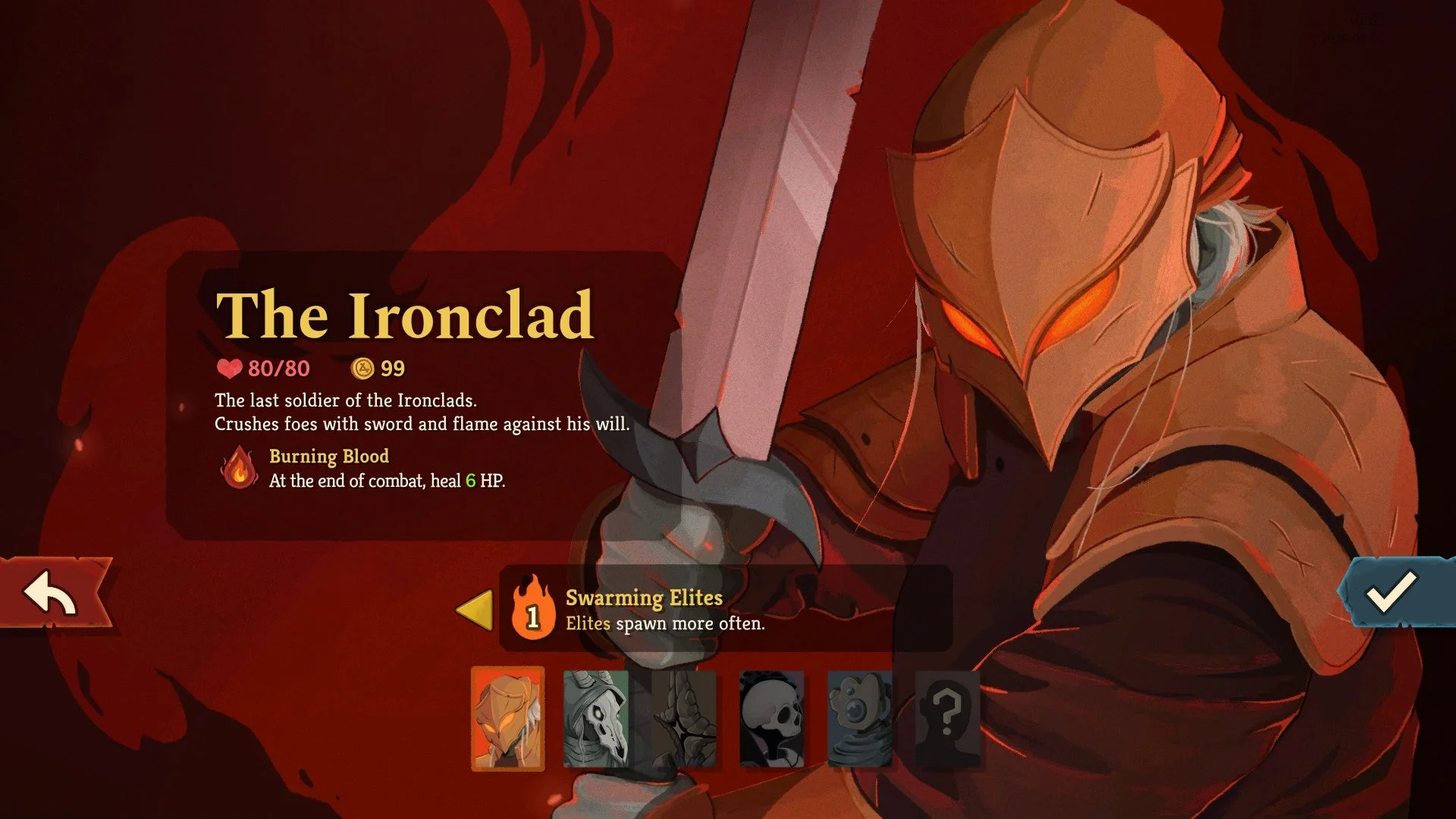
Strength scaling with plus current-card-pool support like and is still a primary win condition. The + + exhaust engine is intact. still heals you after every fight.
The biggest loss is Dead Branch — it was removed entirely. Without it, exhaust builds no longer generate infinite random cards. Instead, you thin your deck aggressively and close with finishers like (0 cost, 17 AoE damage) or . The new exhaust builds are faster and more consistent, but less chaotic.
moved from Ironclad-exclusive to the colorless card pool, so every character can now apply Vulnerable and Weak in a single card.
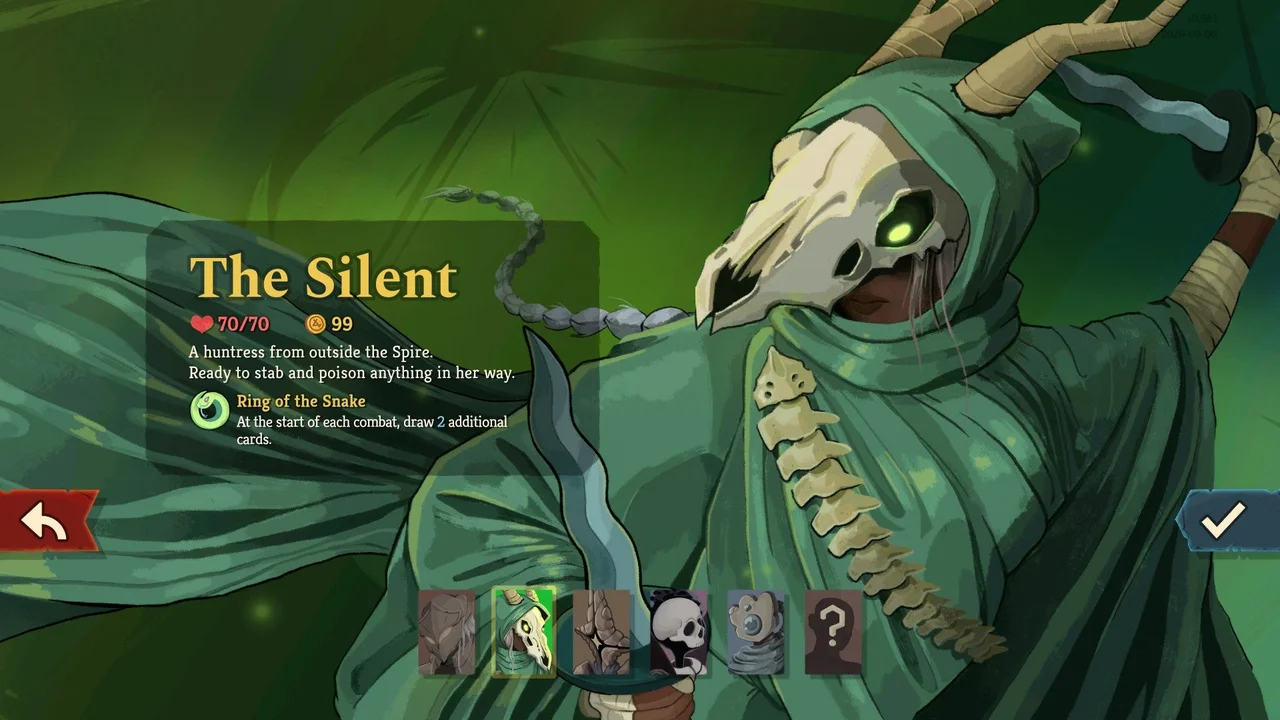
Poison builds still work, but the payoff package is not a one-to-one copy of StS1. Current lists lean on , , , and to force faster poison ticks. Shiv builds with and are intact, and still returns as premium draw and energy.
The game-changer is Sly. Cards with the Sly keyword play themselves for free when discarded from your hand before the turn ends. This transforms every discard card from a cost into a combo enabler. , , and no longer ask you to sacrifice a card — they ask you to choose which Sly cards get played for free this turn.
Experienced players are calling the Sly discard build the strongest archetype in the current Early Access version, with the highest damage ceiling of any character.
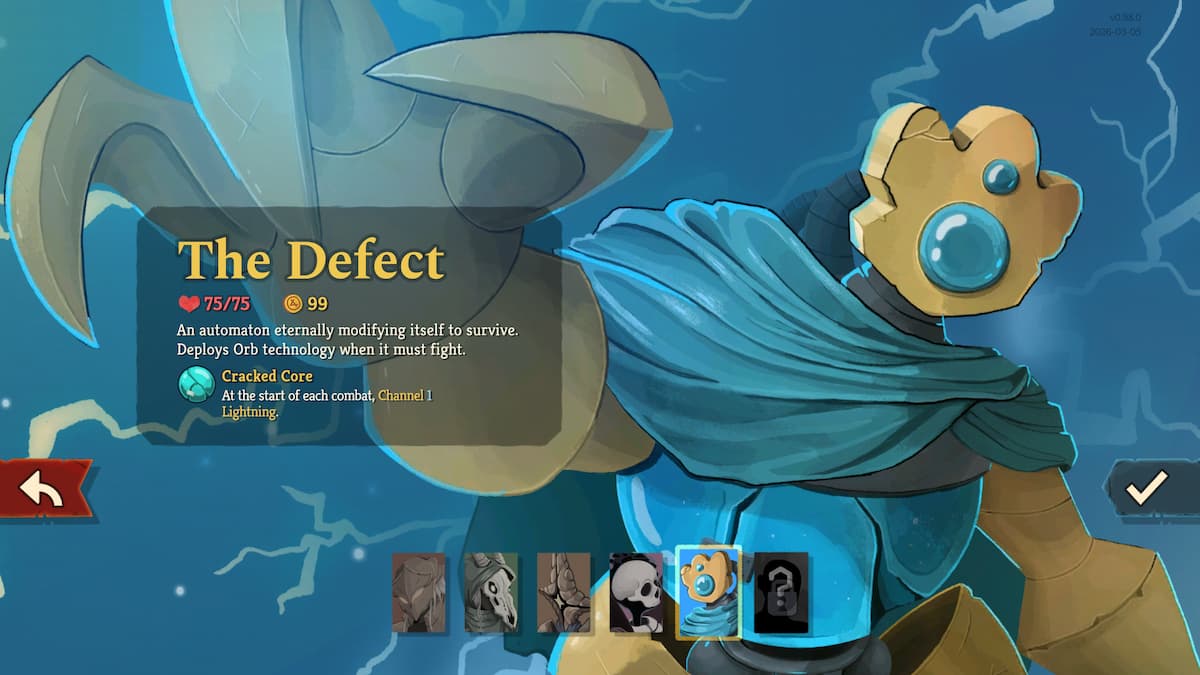
The Orb system (Lightning, Frost, Dark, Plasma) returns, but permanent Focus stacking is gone. In StS1, plus let you scale Focus infinitely and win by sitting behind passive Orb damage. That strategy no longer works.
StS2 Defect uses temporary Focus, momentum-based plays, and more aggressive Orb management. You channel and evoke Orbs actively rather than building a passive engine.
decks return as a fan favorite. The 0-cost attack chain with , , and is back and performs well in the current build.
The Watcher is not in the launch roster. Mega Crit has confirmed she will return during Early Access, but Mantra and Stance mechanics are currently unavailable.
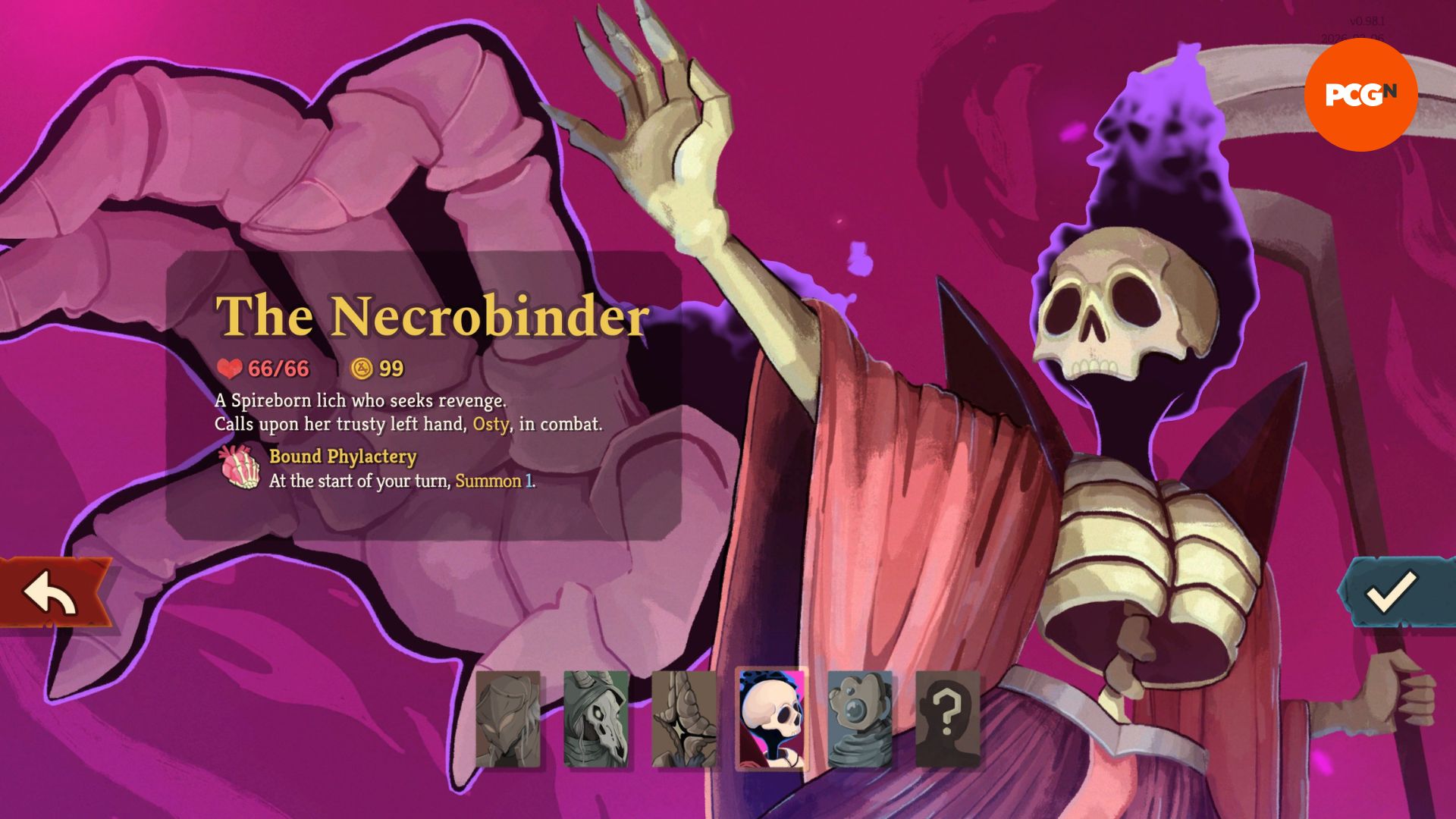
Necrobinder is a fragile spellcaster who fights alongside a skeletal companion called Osty. His core mechanics are Doom (an execution threshold — enemies die when their HP drops to their Doom value), Souls (0-cost token cards that draw 2 then exhaust), and deep exhaust synergies.
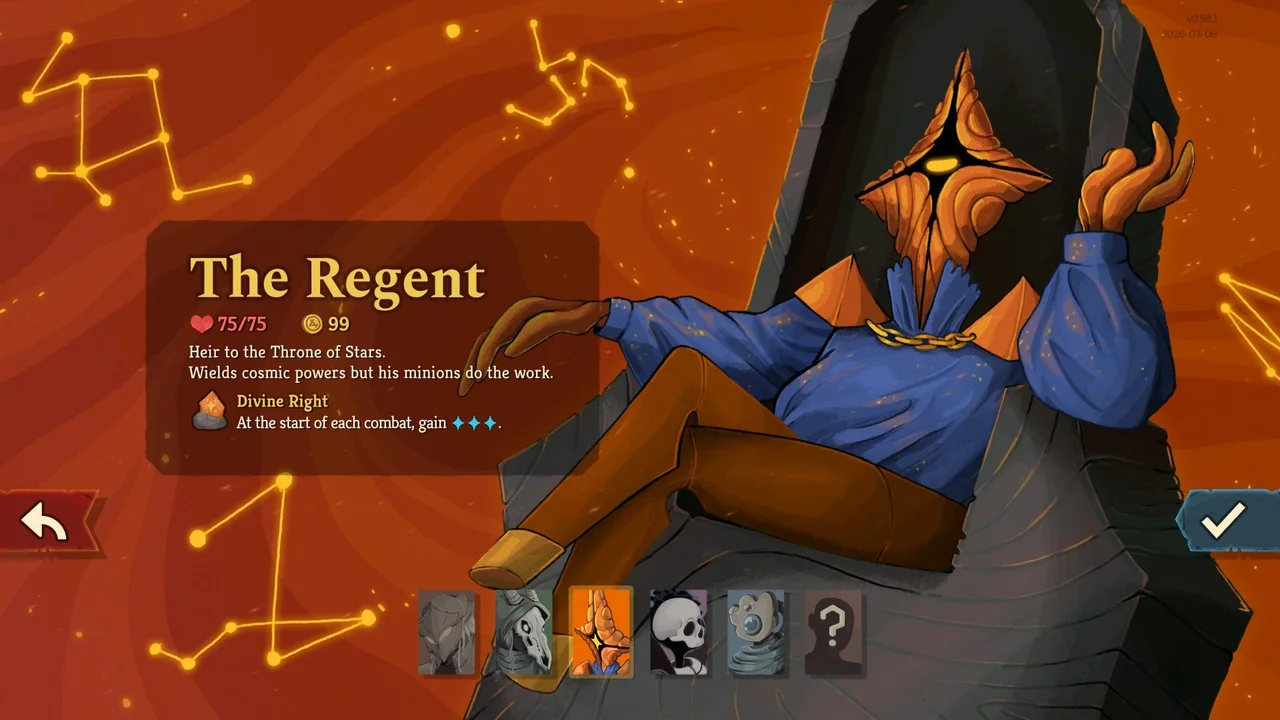
Regent is a resource-management character with two currencies: Energy and Stars. Stars persist across turns with no cap, letting you build toward expensive payoff cards like (7 Stars for 49 AoE damage). The is a forgeable weapon that grows stronger each time you invest Forge points into it.
Core deckbuilding principles transfer directly. Keep decks small (20–25 cards). Skip cards that do not solve an immediate problem. Fight at least two elites per act for relic rewards. Use potions proactively instead of hoarding them. Upgrade at campfires when your HP allows it.
What you need to relearn: relic acquisition timing (Ancients instead of Boss Relics), event decisions (many events no longer have a safe skip option), Defect strategy (temporary Focus instead of permanent stacking), card evaluations (many cards swapped between strong and weak), and route planning (Alternate Acts add variance you cannot memorize away).
Official Video
The Early Access trailer puts the launch roster, co-op framing, and the sequel's presentation in one place before you read the detailed comparisons above.
The official Early Access trailer is the best single video for comparing the sequel's launch roster, presentation, and co-op framing against the first game in one pass.
Watch on Mega Crit YouTubeComparison FAQ
Ironclad Strength scaling and Silent Poison/Shiv builds transfer directly. Silent gains the powerful new Sly discard archetype. Defect Focus stacking was fundamentally redesigned — you need to learn the new temporary Focus approach. Claw decks are back.
Not at launch. The current roster is Ironclad, Silent, Defect, Necrobinder, and Regent. Watcher is expected to return during Early Access.
The Ancient system replacing Boss Relics. This changes how you acquire power throughout a run because reliable energy relics from boss kills no longer exist. Enchantments, Afflictions, Quest Cards, and Alternate Acts each add new decision layers on top of that.
Not required, but StS1 experience gives you a head start on core deckbuilding principles like deck thinning, route planning, and resource management. Be ready to unlearn specific card evaluations and some character strategies.
No. The engine was rebuilt from LibGDX/Java to Godot. Two new characters, six new systems (Enchantments, Ancients, Alternate Acts, Quest Cards, Afflictions, Co-op), reworked returning characters, and a new card pool make this a full sequel.
Official and authority sources
Mega Crit early access launch post
OfficialOfficial launch article for the current early access build.
Mega Crit gameplay trailer post
OfficialThe first broad gameplay overview of the sequel.
Mega Crit release date trailer post
OfficialOfficial summary of the launch date, the five-character roster, and co-op support.
Neowsletter: Alternate Acts
OfficialOfficial explanation of Overgrowth, the Underdocks, and the alternate-act structure.
Neowsletter: Ancients
OfficialOfficial reveal of Act blessings and the Ancient system.
Neowsletter: Necrobinder and Doom
OfficialOfficial explanation of Osty, Doom, Souls, and card transformation.
Neowsletter: Regent, Stars, and Forge
OfficialOfficial reveal of Stars, Minions, Forge, and colorless synergies.
Neowsletter: Sly
OfficialOfficial reveal of Silent's Sly mechanic and discard interactions.
Official Steam FAQ
OfficialPinned by Mega Crit. Confirms the launch time, price, platforms, Steam Deck support, and early access range.
Steam store page
OfficialLaunch date, supported languages, platforms, early access notes, and the official store description.
Kotaku: Slay The Spire 2 review
AuthorityAuthoritative review covering Necrobinder resource design, energy system changes, and STS1-to-STS2 comparison.
XModHub: STS2 vs STS1 comparison guide
AuthoritySide-by-side breakdown of system changes, card pool differences, and engine migration.
Next Stops
Once you know which change matters most, the rest of the site can take you into classes, cards, mechanics, co-op, and patch-aware coverage.
Compare the five launch classes and their roles in the roster.
The cards page is now a dense utility library with live search, character filters, and a verified base-versus-upgraded gallery for the current Early Access pool.
The relics page is a searchable passive-effect database for players who want quick text checks without leaving the run-planning flow.
The potions page keeps short tactical effects searchable and filtered by class so quick combat tools are easy to compare.
All 66 events with every choice, outcome, and best-pick recommendation organized by act.
All 12 bosses with HP values, attack patterns, phase breakdowns, key mechanics, and strategy tips organized by act.
All buffs, debuffs, and special keywords with stacking rules, descriptions, and sources.
Characters, relics, and potions ranked S through D with community consensus explanations.
Quick launch-week advice for beginners, unlocks, decisions, and co-op.
Multiplayer setup, restrictions, and role-split answers live here because co-op is new to the series.
Ranked build guides for every character — core cards, relic synergies, and combo math for each archetype.
Patch tracking and launch timeline pages help you confirm what is current during early access.