Best first pick
Ironclad is still the easiest place to learn the sequel's universal systems before branching into more demanding class engines.
Characters
This page exists for the first roster question most players ask: which class should I start with, and what makes each character feel different in the launch build?
Use the quick comparisons here if you are choosing a first class. Then jump into the full class pages when you want launch-week guidance for Ironclad, Silent, Defect, Necrobinder, or Regent.
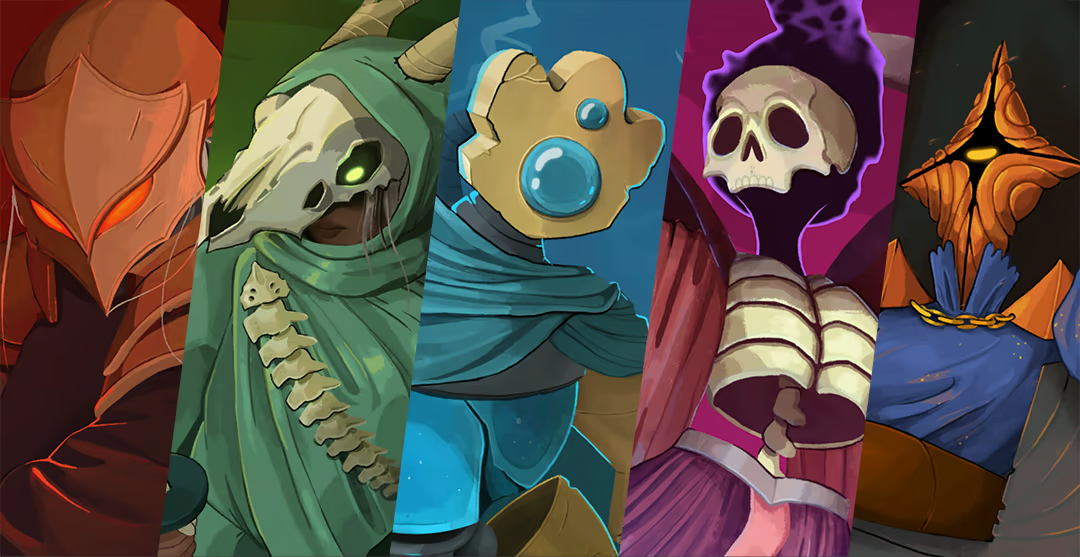
Roster Snapshot
Ironclad, Silent, and Defect give returning players familiar names, but not identical decks. Necrobinder and Regent are the two truly new slots, and both add mechanics that make the sequel feel less like a simple expansion of the first game.
Ironclad is still the easiest place to learn the sequel's universal systems before branching into more demanding class engines.
Silent asks the most from discard order in the public reveal trail, while Regent and Necrobinder stack new resource rules on top.
Necrobinder and Regent are the classes to study if you want to see Doom, Souls, Stars, Forge, and other sequel-only ideas in action.
Comparison
The launch roster is built around three returning classes and two brand-new ones. That split matters because the returning names help veterans orient, while Necrobinder and Regent carry the most obviously sequel-only mechanics.
Use these comparisons to decide whether you want the smoothest bridge class, the boldest redesign, or the most unfamiliar systems first.
Slay the Spire 1
The red class was the simplest way to learn the game's basic tempo, block, and damage priorities.
Slay the Spire 2
Ironclad still looks like the cleanest bridge class, but now he sits inside a run structure filled with sequel-only systems like Quest Cards and Ancients.
Why it matters
He still looks like the best orientation class, but the sequel asks him to teach the new game rather than simply repeat the old one.
Slay the Spire 1
Silent was already a technical class, but discard often functioned as filtering, setup, and poison support rather than a free-tempo engine.
Slay the Spire 2
Mega Crit explicitly rebuilt Silent around Sly, discard chains, and a changed card pool, with Blade Dance called out as working differently.
Why it matters
This is the returning class with the clearest public warning not to assume that old lines still map one-to-one.
Slay the Spire 1
Defect encouraged strong orb-based habits that many veterans still remember almost card-for-card.
Slay the Spire 2
Defect returns, but Mega Crit has been much lighter on public detail, which makes the launch-build read more conservative than Silent's or Regent's.
Why it matters
The class name is familiar, but the correct launch-week posture is caution, not nostalgia-driven certainty.
Slay the Spire 1
Slay the Spire 1 had no launch class built around a standing companion, Souls, Doom thresholds, and combat-only transformations.
Slay the Spire 2
Necrobinder arrives as a new class with Osty, Doom, Souls, and in-combat card transformation hooks.
Why it matters
It is one of the clearest places to see that the sequel is not just remixing old class identities.
Slay the Spire 1
The first game did not have a class built around Stars, Forge, and a royal setup engine that grows through delayed resources.
Slay the Spire 2
Regent is a new launch class whose preview trail centers on Stars, Forge, minions, and a slower setup economy.
Why it matters
Regent is the sequel's cleanest proof that long-setup class design has expanded beyond the first game's launch identities.
Official Video
The official trailer is still the quickest way to reorient yourself if you have not seen how all five Slay the Spire 2 characters sit in the same build. It helps before you read class primers because it establishes the launch-era tone and presentation.
This official trailer is the fastest way to see the five launch characters in the current Early Access presentation.
Watch on Mega Crit YouTubeCharacter Guides
These pages keep the launch-week advice honest. They tell you what is official, what feels different in play, and what each class asks you to learn first before you start chasing build ideas.
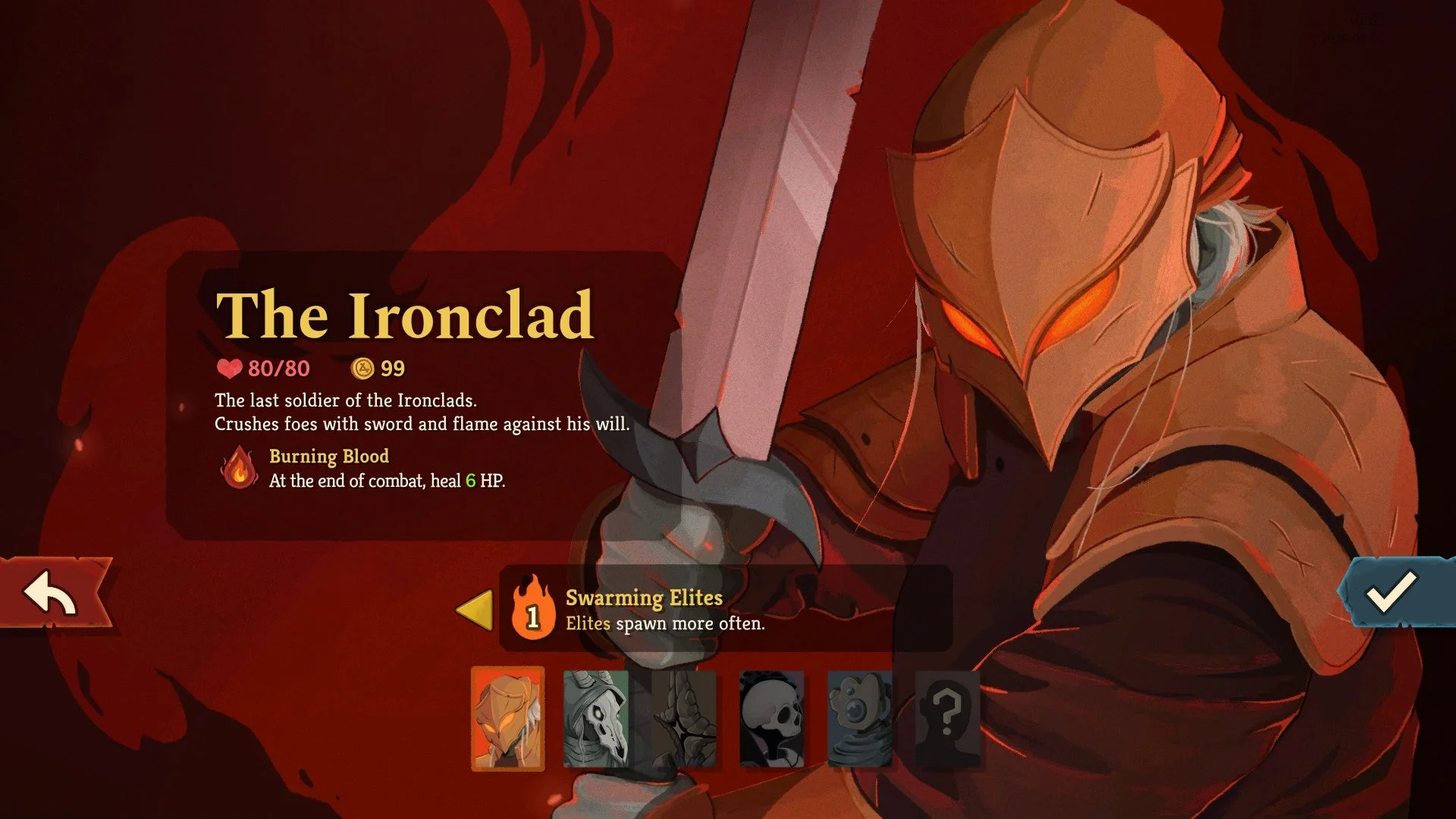
Ironclad is the safest starting character in Slay the Spire 2. With 80 HP and Burning Blood healing after every fight, he forgives Act 1 mistakes better than any class. His toolkit rewards committing to one scaling axis — Strength, Exhaust, or Block — and his weakness is card draw.
Quick answer
Who should play Ironclad, how his mechanics work, and what makes him different from his STS1 version.
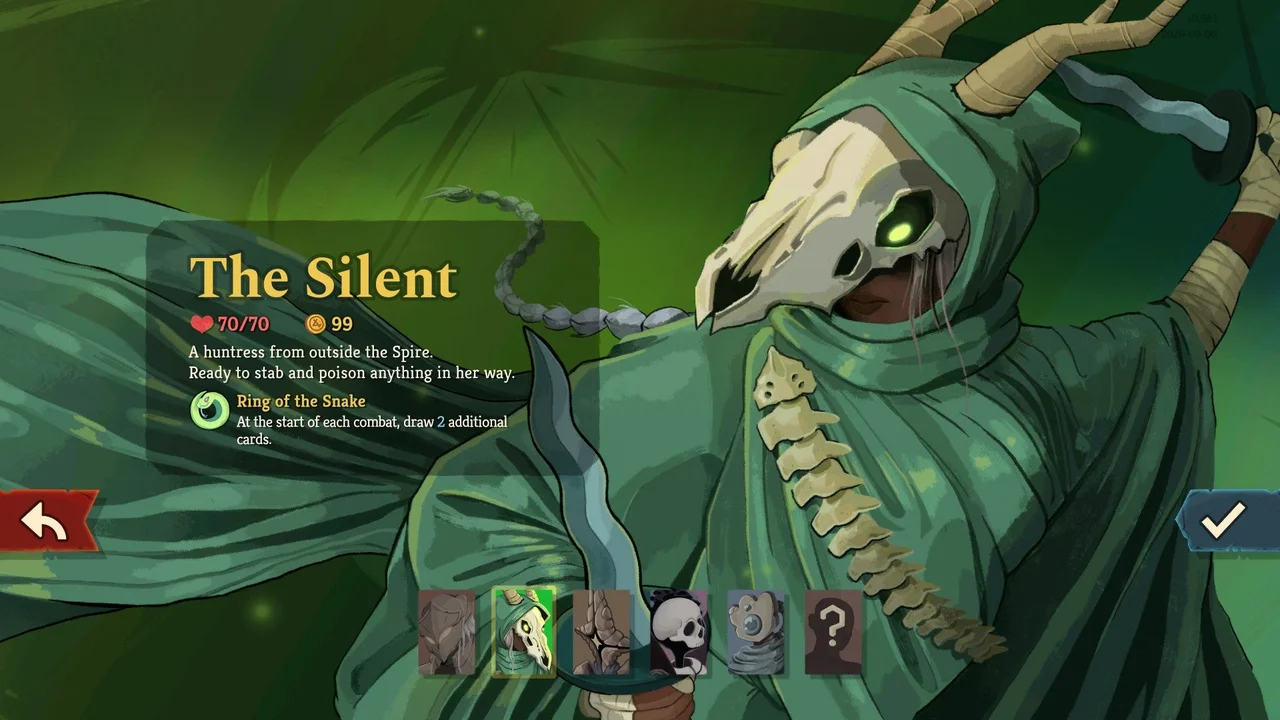
Silent is the highest-ceiling character in Slay the Spire 2. The new Sly keyword turns discard into free damage, but the 70 HP pool and zero built-in healing make her the most punishing class for mistakes. Mastering discard order is the core skill.
Quick answer
Who should play Silent, how Sly and discard mechanics work in detail, and what makes her STS2 version fundamentally different from STS1.
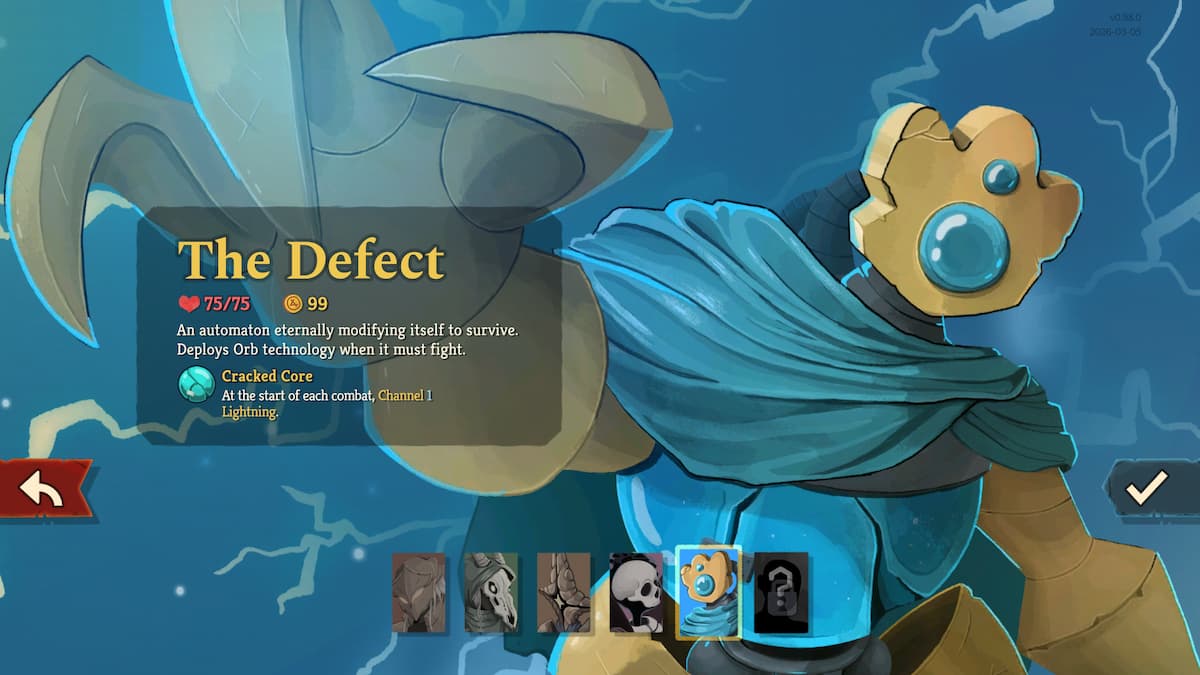
Defect is the most redesigned returning character. Permanent Focus stacking is gone — replaced by temporary spike turns through Synchronize. The Claw 0-cost build ignores Orbs entirely and is the class's strongest archetype. Commit to Claw or Orbs by mid-Act 1; mixing kills both.
Quick answer
Who should play Defect, how the Orb and Focus rework changes decision-making, and why committing to one build path early matters more on Defect than any other character.
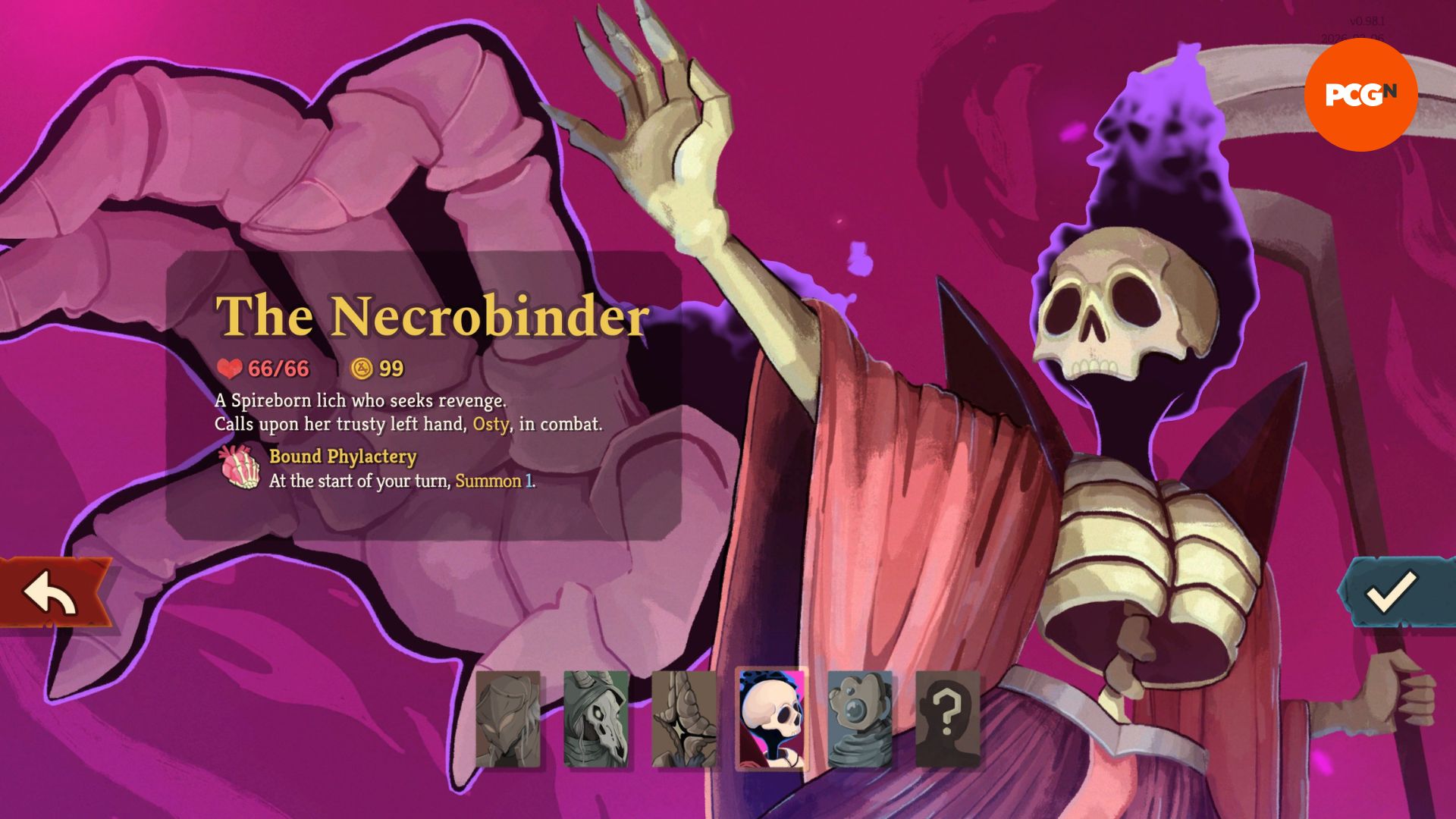
Necrobinder is the most mechanically dense character in STS2 — a new class with three interlocking systems: Doom (execution threshold), Souls (0-cost token cards), and Osty (skeletal companion). The floor is punishingly low but the ceiling rivals Silent.
Quick answer
Who should play Necrobinder, how Doom, Souls, and Osty interact, and why understanding the death-timing system matters more than memorizing card names.
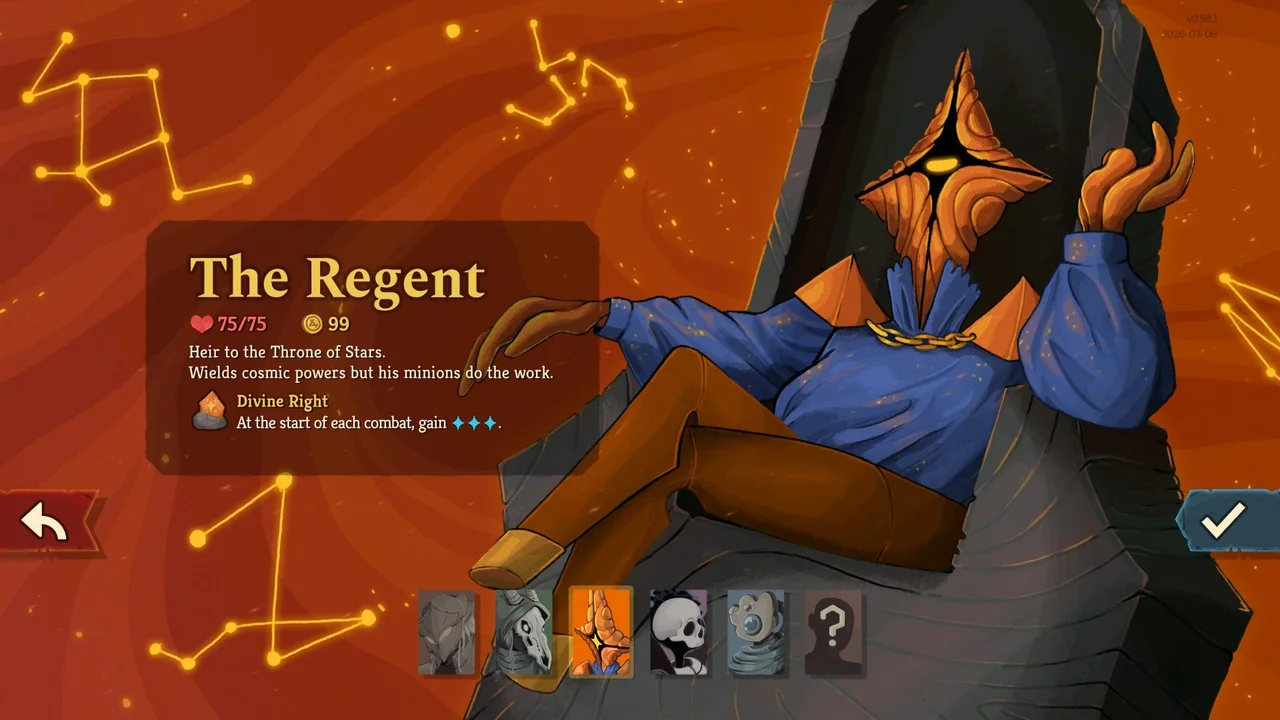
Regent is STS2's resource-management character — built around Stars (a persistent second currency) and Forge (scaling Sovereign Blade). Stars persist across turns with no cap, creating a completely different economy. The critical rule: commit to Stars or Forge, never both.
Quick answer
Who should play Regent, how Stars and Forge create a unique resource economy, and why patience is the core skill.
Character FAQ
Mega Crit launched early access with five playable characters: Ironclad, Silent, Defect, Necrobinder, and Regent.
Ironclad is still the safest first pick because the class lets new players learn sequel-wide systems before juggling Stars, Doom, or a more sequencing-heavy hand.
Yes. Necrobinder and Regent are the two brand-new launch characters, while Ironclad, Silent, and Defect return from the first game.
Sources
Mega Crit early access launch post
OfficialOfficial launch article for the current early access build.
Mega Crit release date trailer post
OfficialOfficial summary of the launch date, the five-character roster, and co-op support.
Neowsletter: Necrobinder and Doom
OfficialOfficial explanation of Osty, Doom, Souls, and card transformation.
Neowsletter: Regent, Stars, and Forge
OfficialOfficial reveal of Stars, Minions, Forge, and colorless synergies.
Neowsletter: Sly
OfficialOfficial reveal of Silent's Sly mechanic and discard interactions.
Next Stops
Once you know which character interests you, the linked pages help you browse the card pool, solve first-run mistakes, and keep up with launch-week changes.
The cards page is now a dense utility library with live search, character filters, and a verified base-versus-upgraded gallery for the current Early Access pool.
The relics page is a searchable passive-effect database for players who want quick text checks without leaving the run-planning flow.
The potions page keeps short tactical effects searchable and filtered by class so quick combat tools are easy to compare.
All 66 events with every choice, outcome, and best-pick recommendation organized by act.
All 12 bosses with HP values, attack patterns, phase breakdowns, key mechanics, and strategy tips organized by act.
All buffs, debuffs, and special keywords with stacking rules, descriptions, and sources.
Characters, relics, and potions ranked S through D with community consensus explanations.
See what changed from Slay the Spire 1 to Slay the Spire 2.
Quick launch-week advice for beginners, unlocks, decisions, and co-op.
Multiplayer setup, restrictions, and role-split answers live here because co-op is new to the series.
Ranked build guides for every character — core cards, relic synergies, and combo math for each archetype.
Patch tracking and launch timeline pages help you confirm what is current during early access.